I received an e-mail from a local landscape professional in late February regarding dieback or damage to several 'Nellie R. Stevens' hollies. As part of my response, I decided to pass along photos from a specimen on the grounds of the Craven County Agricultural Building and to summarize what I've observed through the years to be among the more common disorders or pest problems on this cultivar.
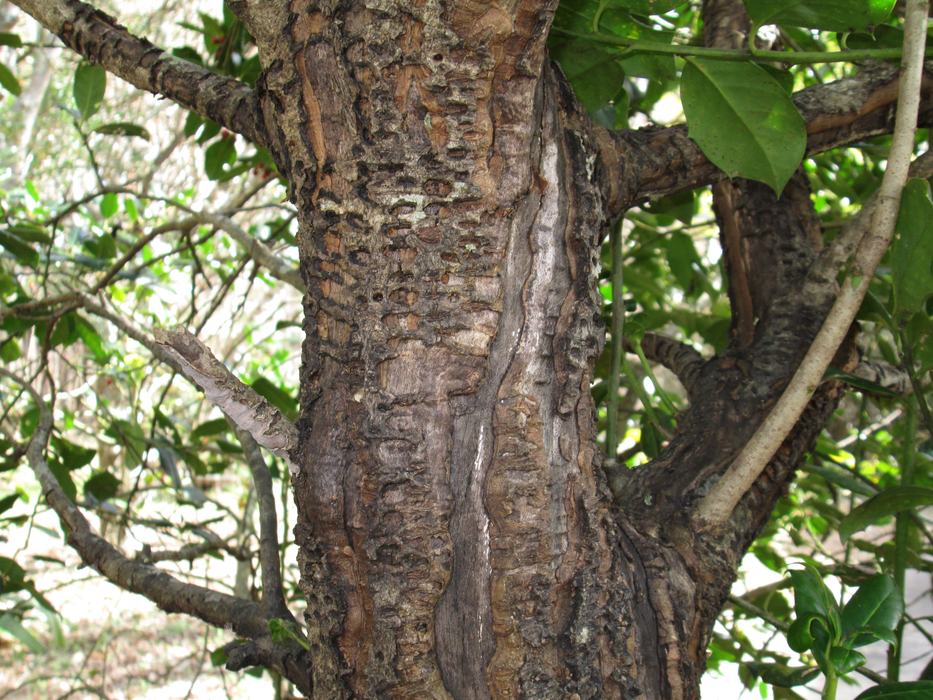
First, 'Nellie R. Stevens' is quite prone to sapsucker damage. The first image shows long term damage from one or more of these birds. Note that the original wounds become stretched or elongated over time as trunk circumference increases. The longitudinal splits may be the result of cold damage, or sapsucker wounds coalescing over time.
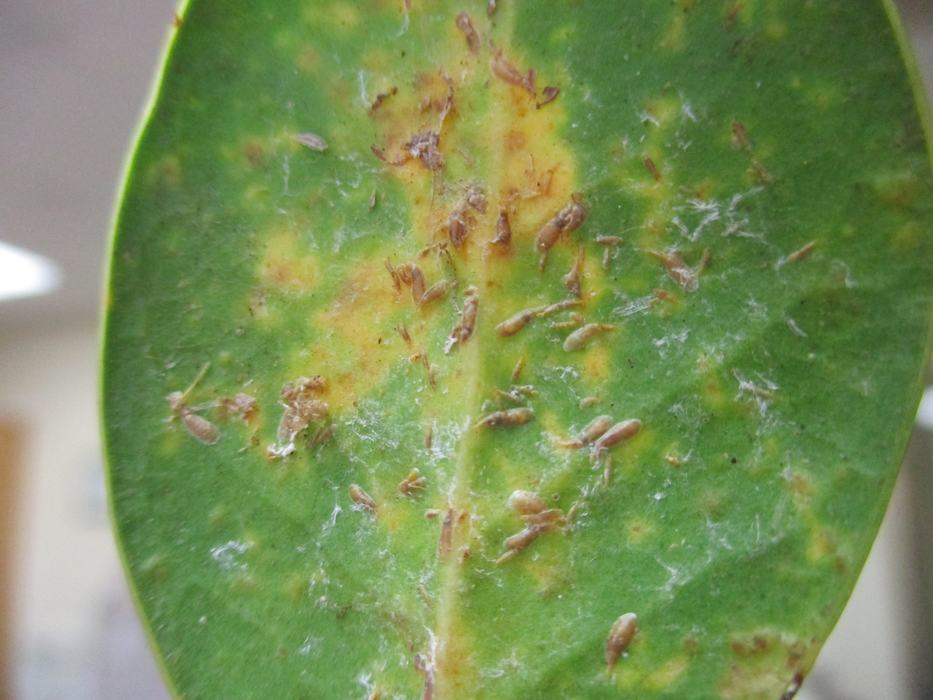
Another very common problem to watch for on 'Nellie R. Stevens' is armored scale, in the Family Diaspididae. The NC Plant Disease and Insect Clinic confirmed the insects in the image below to be armored scales, most likely tea scale. For confirmation at the species level, the insects would have to be mounted on a slide, but control measures for armored scale, in general, can be found in the NC State University information note Armored Scale Identification and Management on Ornamental Plants.
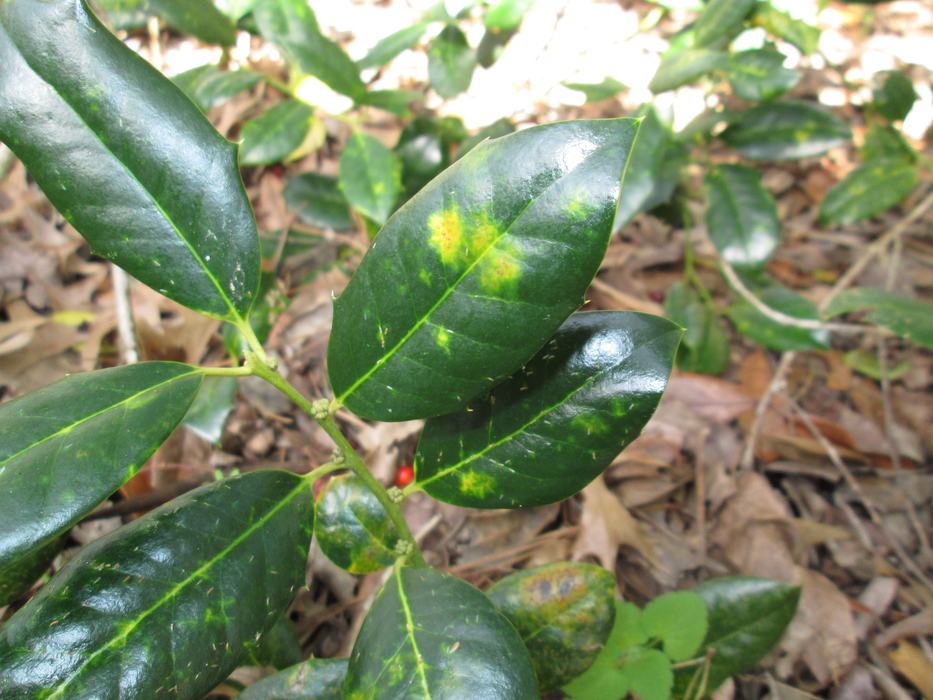
Suspect armored scale if you see bright yellow-green, splotchy discoloration on the upper leaf surfaces, as seen below.
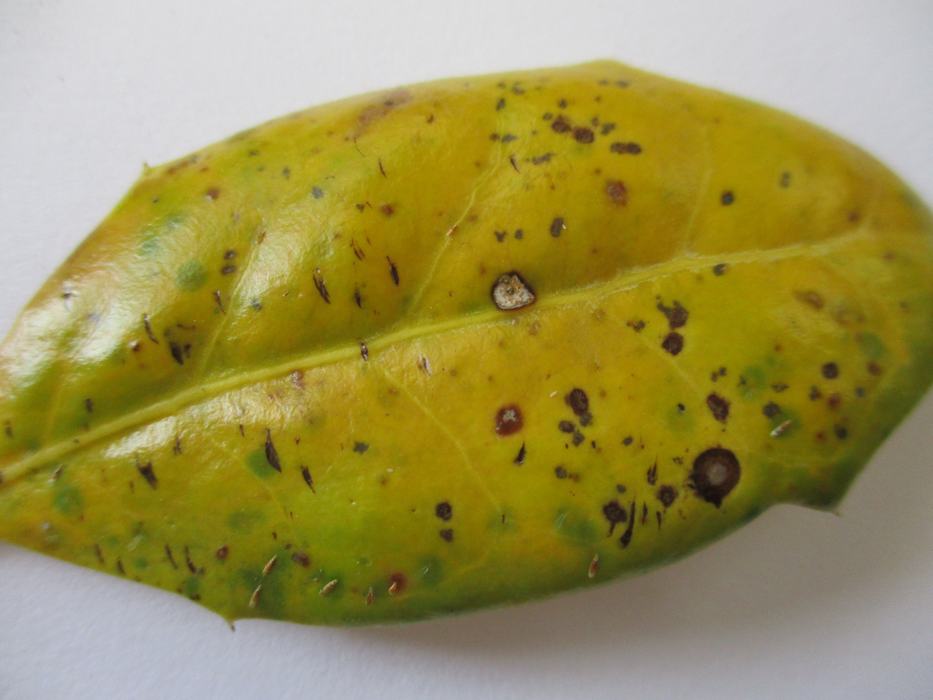
Winter nutritional deficiencies are common on holly foliage in the winter, especially on Chinese hollies and 'Nellie R. Stevens'. The image below shows typical symptoms. In addition, the scratch-like marks are most likely from needle tips damaging adjacent foliage when plants are exposed to high winds. Note also that there are a few scales on the upper leaf surface, near the bottom of the photo. This particular leaf detached very easily from the twig and was probably an older leaf that was going to drop off this spring anyway.