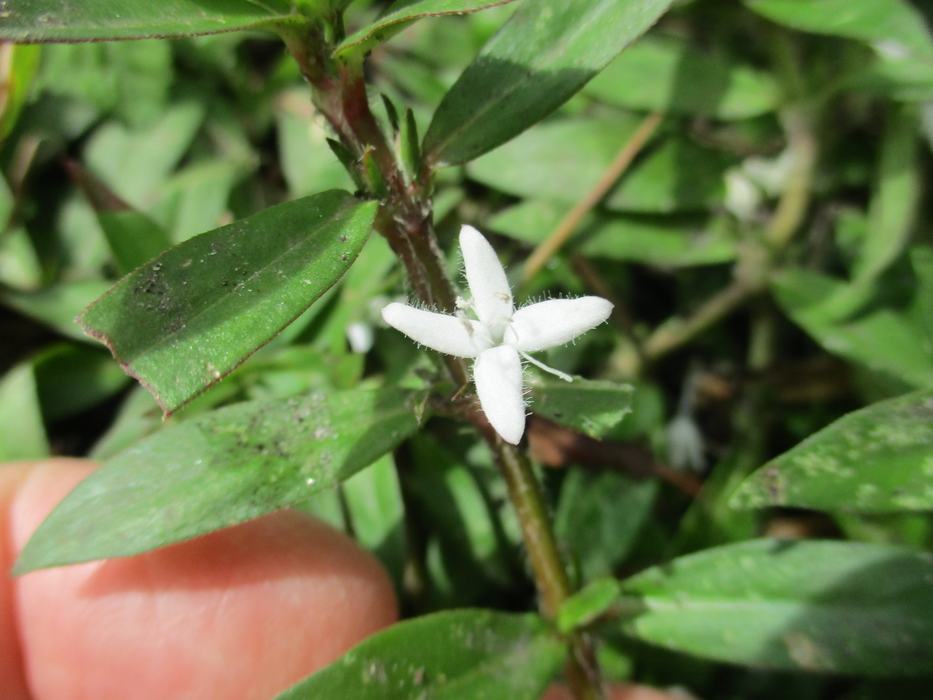
Virginia buttonweed (Diodia virginiana) has a high profile by early October, for two reasons. First, plants are producing tiny white flowers in great abundance this time of year. Secondly, a high percentage of Virginia buttonweed plants are infected with a virus that causes a distinct yellowing of the foliage, and this becomes noticeable in late summer. Virginia buttonweed is widespread in the Eastern U.S., and in lawns is especially encouraged by conditions such as compacted soils, poor drainage, and excessive irrigation. It is known to be exceptionally difficult to control with chemicals, so consideration of site conditions and cultural practices needs to be part of your management program. Refer to the Virginia buttonweed information note from Clemson Cooperative Extension for an excellent overview of home lawn management options. See the images below for assistance with identification. Samples can also be dropped off to your nearest N.C. Cooperative Extension Center.
Virginia Buttonweed
(Updated: Dec. 3, 2024, 10:16 a.m.)
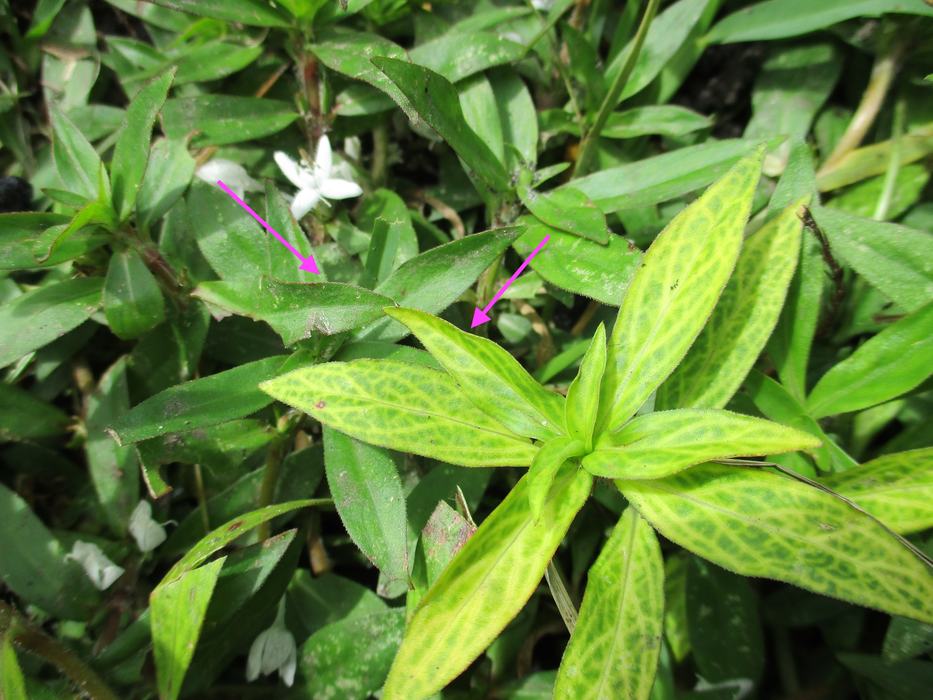
yellow mosaic appearance of a virus-infected plant. The discoloration becomes evident in
late summer. The virus does not affect the health or spread of the plants.
Join our mailing list!
Enter your email address to receive updates.
Written By