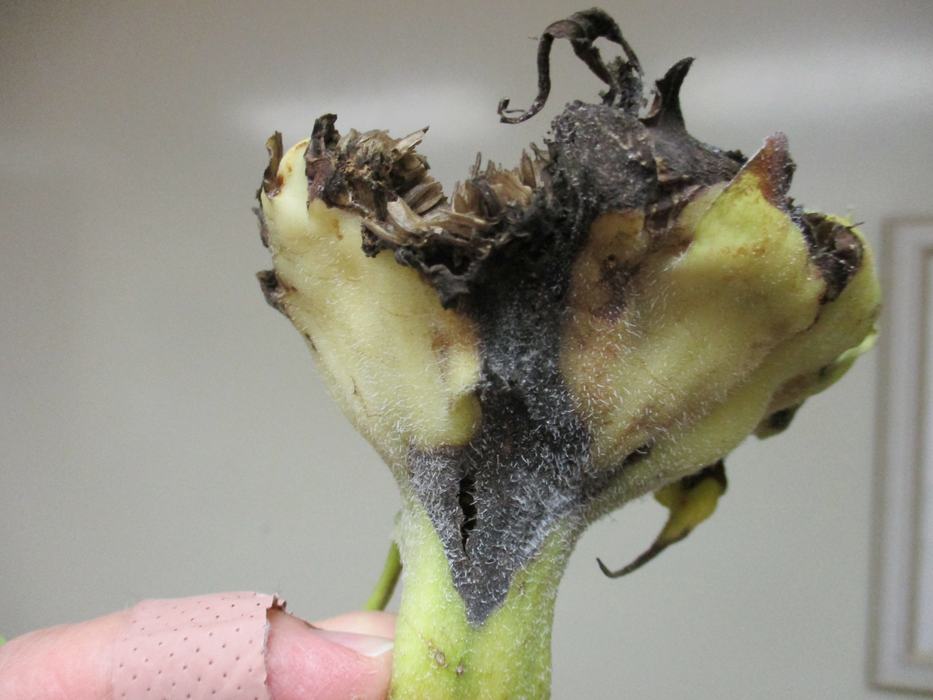
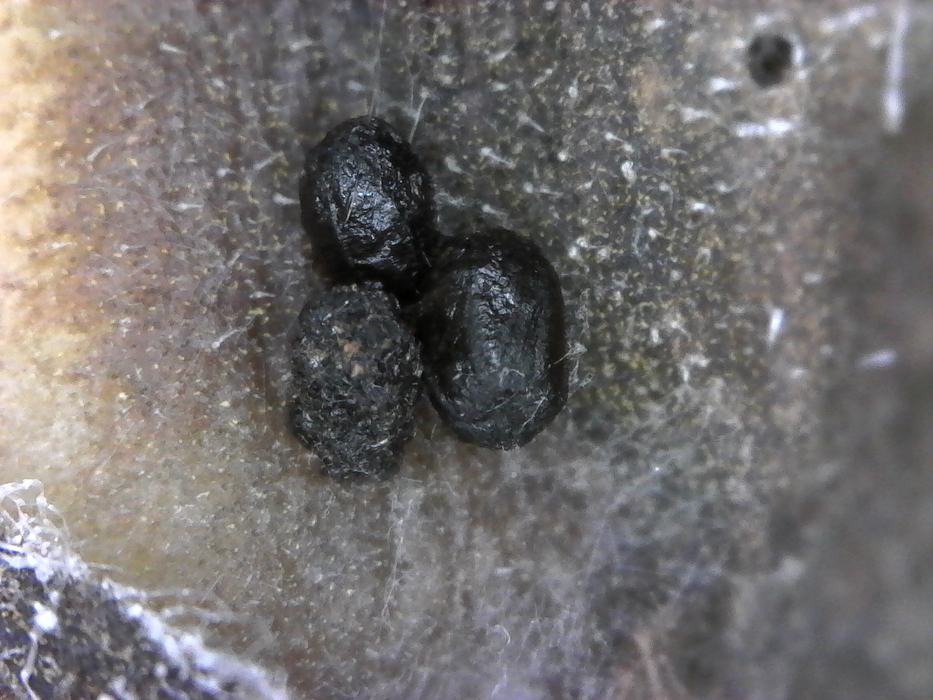
The symptoms are consistent with Sclerotinia head rot.
This is a soil-borne disease that causes sporadic infections, normally following cool, wet weather. The fungus has a wide host range and occasionally is a problem on beans, cabbage, collards and other brassicas, carrot, lettuce, tomato and others. Do not keep cull piles nearby, since they will be a source of inoculum. Send affected parts to the landfill. Avoid overhead irrigation. Crop rotation, deep plow between seasons since the black resting structures can produce fruiting bodies that produce and spread spores on the wind. The wind-blown spores are primarily what infect the plants. Sclerotia that are within this planting can be a source of spore infections, but spores might also come from nearby fields and plantings, so cultural control measures on this planting might not provide good control. Soil solarization is effective for killing sclerotia on site, but requires a summer fallow period, and is not going to prevent infections that blow in from other areas. The disease varies in severity from season to season.
Chlorothalonil fungicides might provide some preventative control for unaffected plants and where the seeds are not meant for consumption. Use of resistant varieties where available is an effective control strategy. Check with the company where seeds are marketed.