It's known that unstaked trees develop better trunk taper, and develop wind sturdiness much more rapidly, as compared with staked trees. There are situations where staking can be helpful or even necessary, but in most cases staking should not be a routine or automatic step in new tree planting. One of the most serious problems associated with staking is the failure to remove the staking materials in a timely manner. One year is generally long enough for a new tree to be staked; beyond that, not only will tree development be affected, but the tree can be damaged by the wires, ropes or other materials used to connect the tree to the stakes. In recent years, researchers and the arborist industry have been evaluating methods for stabilizing the root ball without fixing the tree to a rigid staking apparatus. See this Tree staking systems page from the University of Florida for more information on alternative staking systems.
Staking Newly Planted Trees
(Updated: Dec. 3, 2024, 10:05 a.m.)
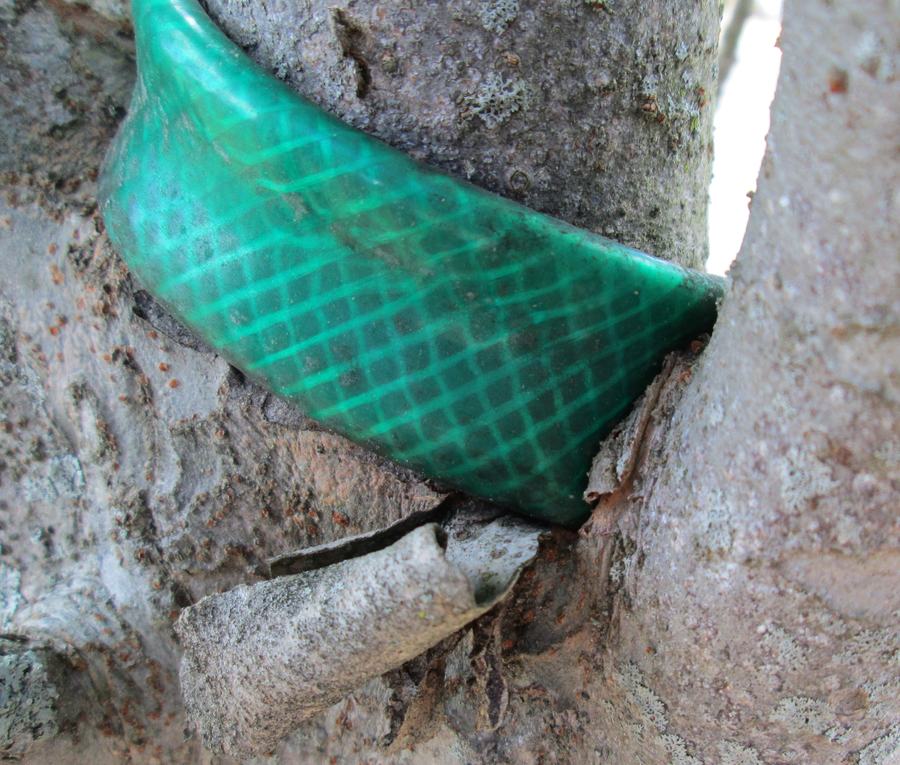
in between adjoining stems.
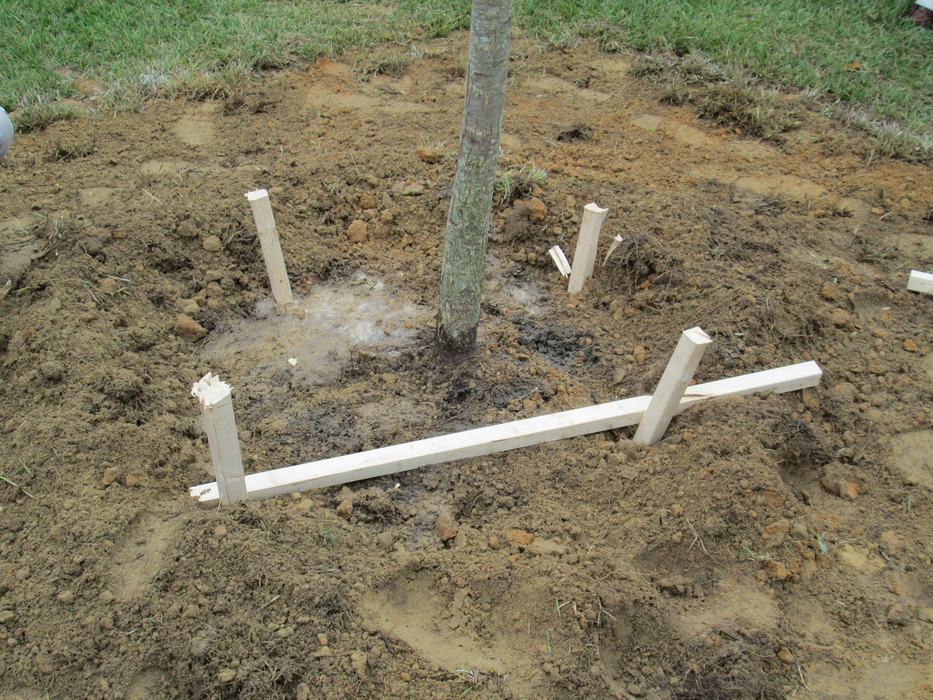
Council educational event in Greenville, NC, September 2014.
Join our mailing list!
Enter your email address to receive updates.
Written By