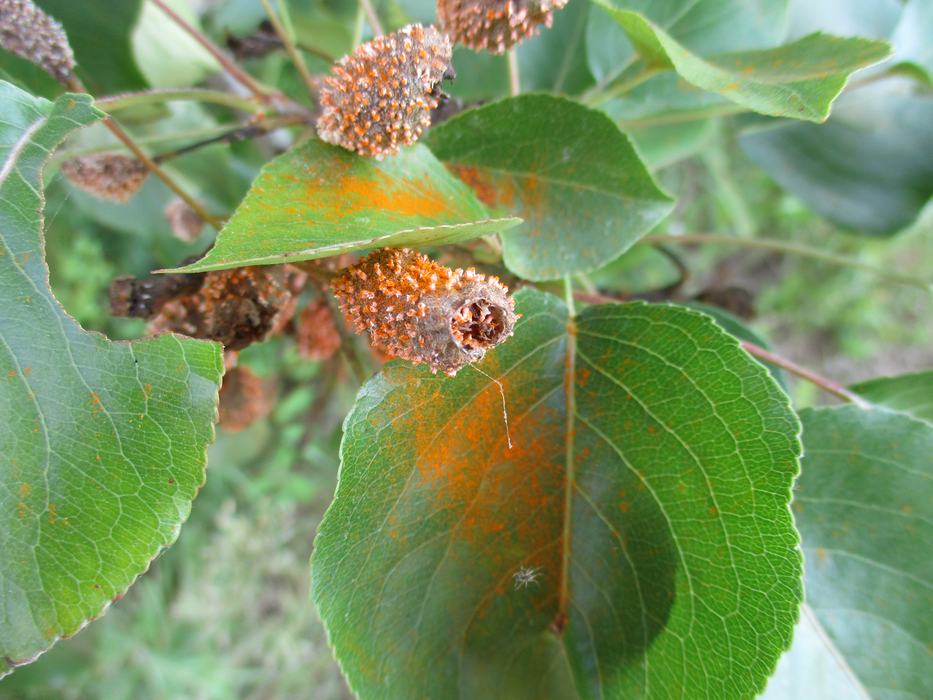
Rust infection of callery pear (Pyrus calleryana) fruit is a common occurrence in the spring, especially following periods of cool, rainy weather. It may look messy, and we may have a collective consciousness that all landscape diseases must be controlled in some way; but rust on callery pear is very much a positive outcome, rather than something to be concerned about.
It's a positive because seed production will be substantially reduced on infected trees, and callery pear is one of the most invasive and destructive non-native invasive species currently present in the eastern U.S. So if we can get just a little bit of a break on seed production, then we should be thankful whenever we see a heavily infected wild callery pear, or even a heavily infected Pyrus calleryana 'Bradford' pear in the landscape.
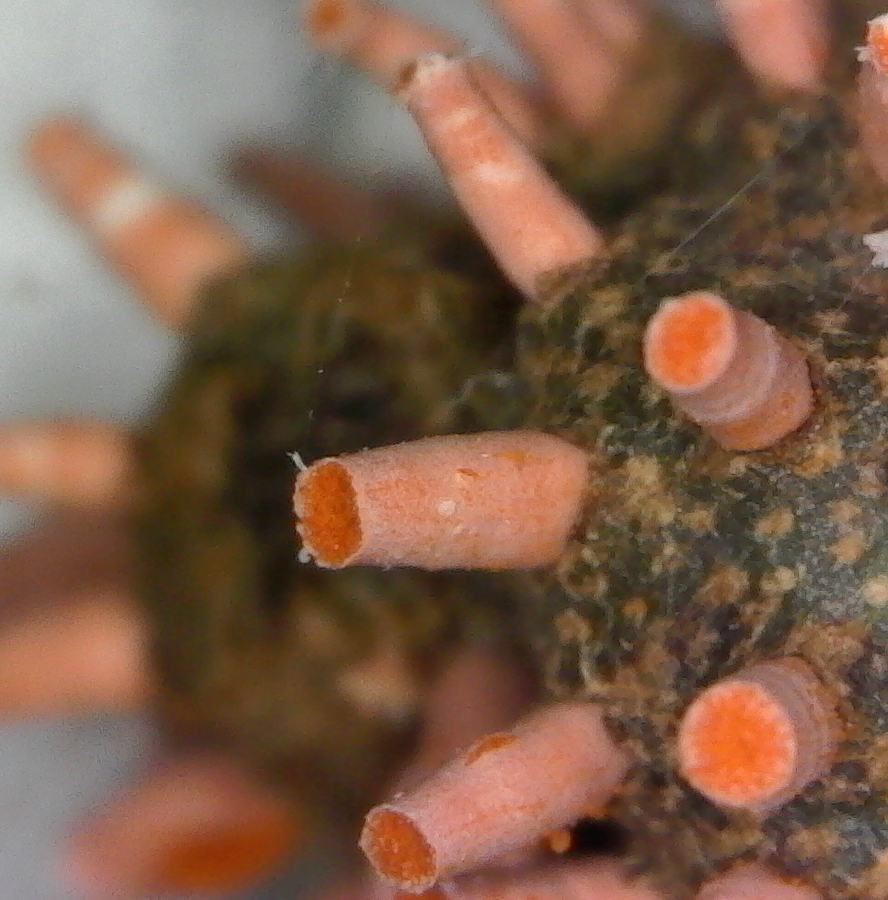
The images represent infection by cedar-quince rust (Gymnosporangium clavipes), which alternates between species in the rose family (Rosaceae, including pears) and species of juniper (Juniperus). The close up features one of the rust fruiting structures, known as aecia.