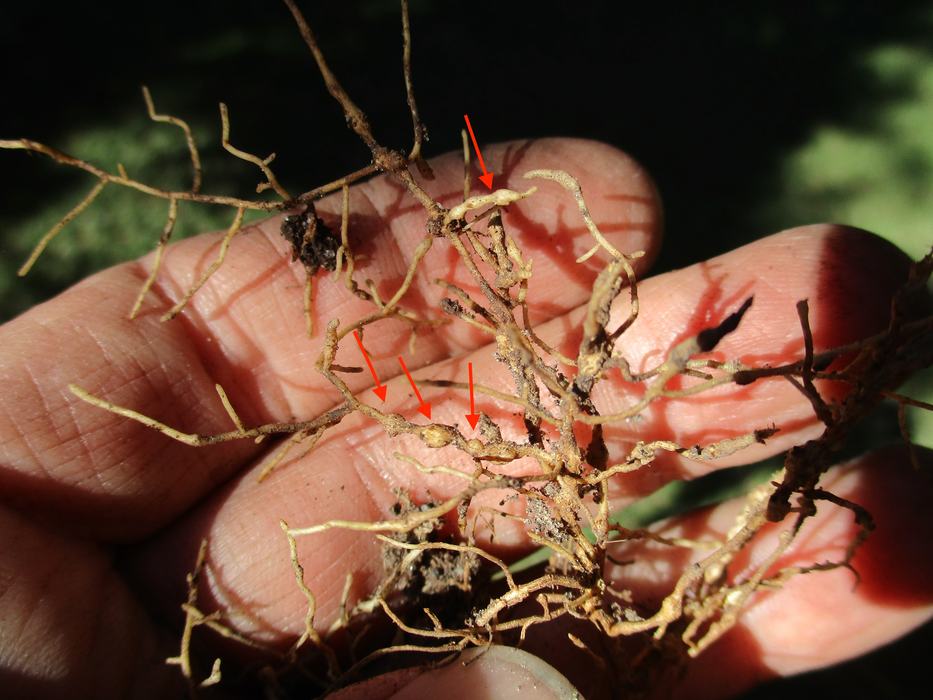
Root-knot nematodes have a tremendous host range and may be involved in more landscape and garden problems than you realize. Recently I submitted salvia from my home landscape to our Plant Disease and Insect Clinic on campus, fairly confident in my diagnosis of Tomato Spotted Wilt Virus (TSWV). Not for the first time, the Clinic shot down my diagnosis and informed me that root-knot
nematode was the primary problem. I didn't look closely enough.
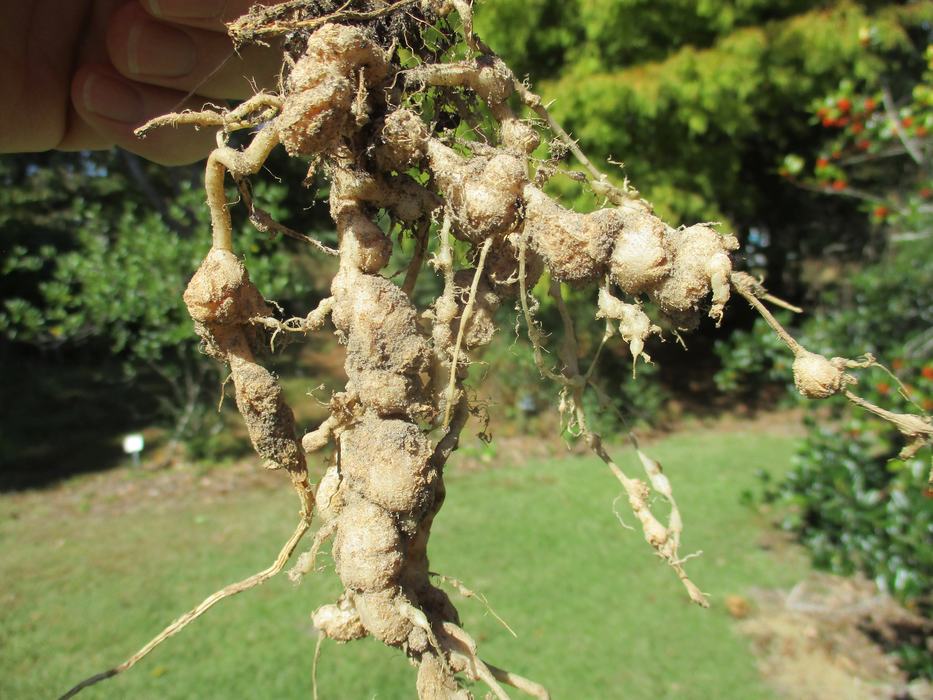
Shortly afterward, our crops agent Mike Carroll and I inspected the rootball of a boxwood someone had dropped off at the office, and the roots were obviously heavily infested with root-knot nematodes.
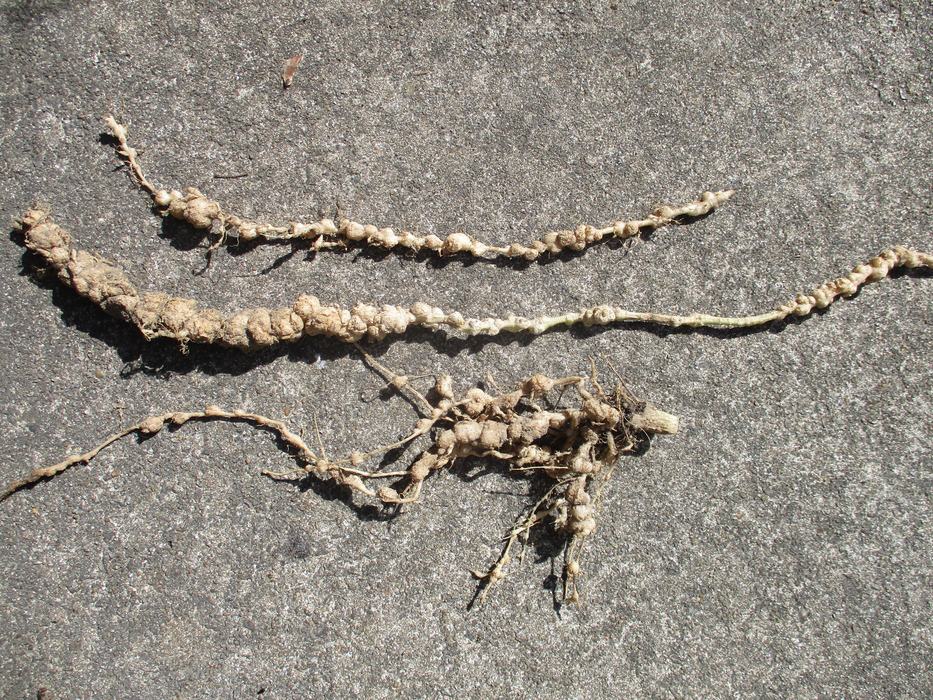
A third example this fall involves watermelon plants grown in a local community garden that our office works with. As seen in the images below, root-knot nematode damage to watermelon roots is quite dramatic.
So what can be done in non-commercial settings such as home landscapes and community vegetable gardens? Start with the Management of root-knot nematodes in bedding plants, which provides non-chemical strategies such as plant selection, site preparation, and bio-control with marigolds. This information note cautions homeowners against purchasing marketed chemical products for nematodes, stating "There are no effective nematicides (pesticides that affect nematodes) available for homeowners ... ". For the vegetable garden, see Control of root-knot nematodes in the home vegetable garden. Once again, variety selection, bio-control and various cultural practices will take center stage. You won't eliminate nematodes from the site, but you can make them less relevant.