As of October 20, the fruits of our local persimmon trees (Diospyros virginiana) are ripening and will soon be dropping from the trees. This can create a mess and even a hazard on sidewalks and parking lots. Persimmon trees are mostly dioecious, meaning male and female flowers are usually found on separate trees. For the female trees dropping fruit in high-risk areas, is there any management option other than cutting the trees down? I recently investigated this question along with a landscape professional from Raleigh, and what we both discovered from different sources is an injectable plant-growth-
Persimmon fruit is an important food source for wildlife, and as landscape trees persimmons are sturdy, large-growing, and relatively problem-free. They should be preserved where space is adequate, and especially where heavy fruit loads won't be a problem.
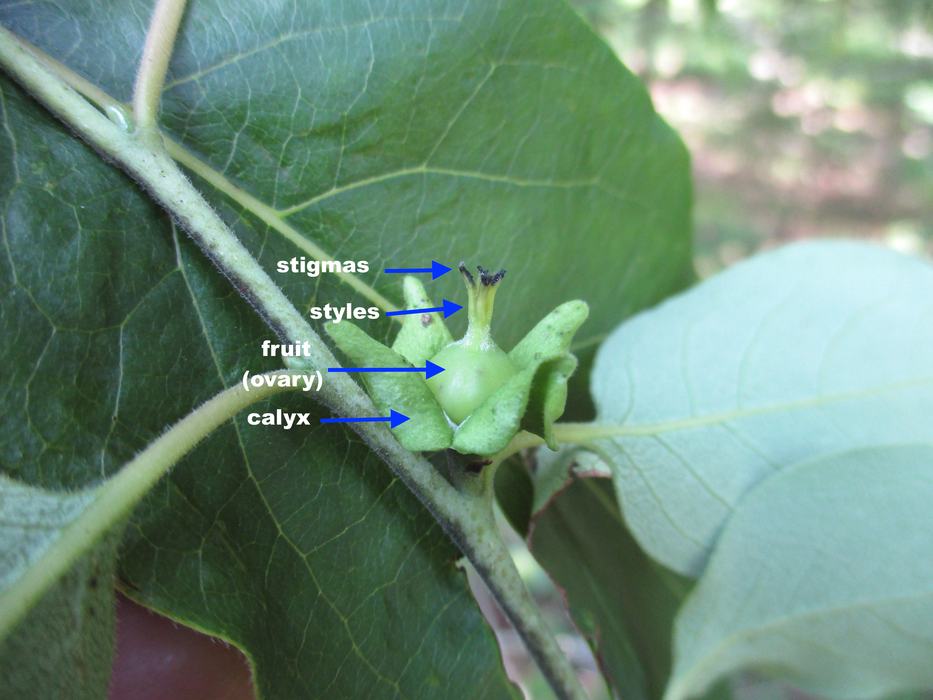
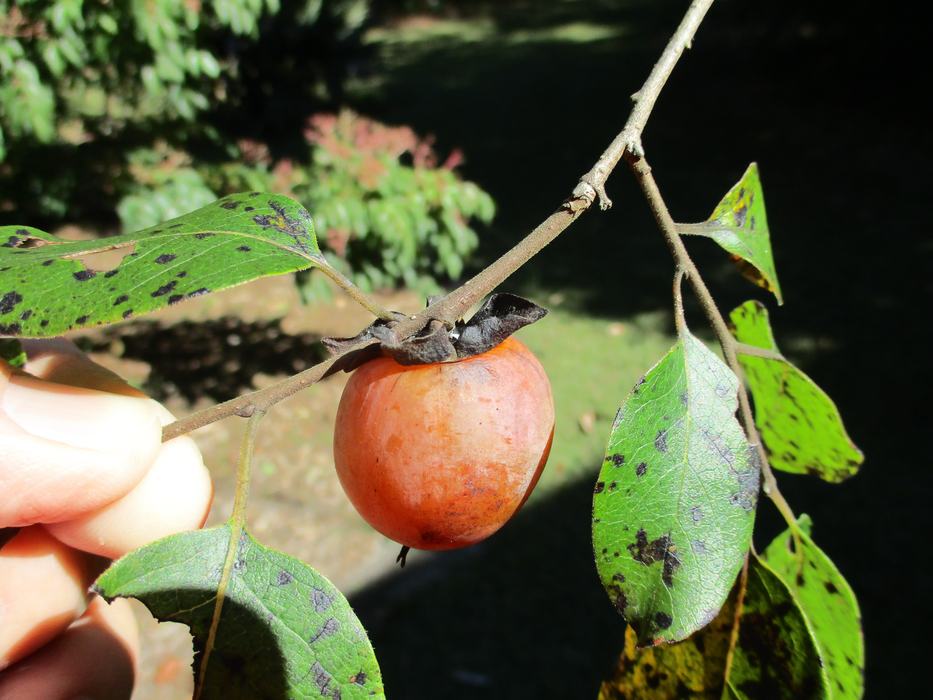
In the first image, taken 5/26/20, we see an immature fruit beginning to develop from the remnants of a female persimmon flower. The second image was taken on 10/20/21. The fruit (now hanging downwards) looks ripe, but I quickly found that it wasn't ripe enough.