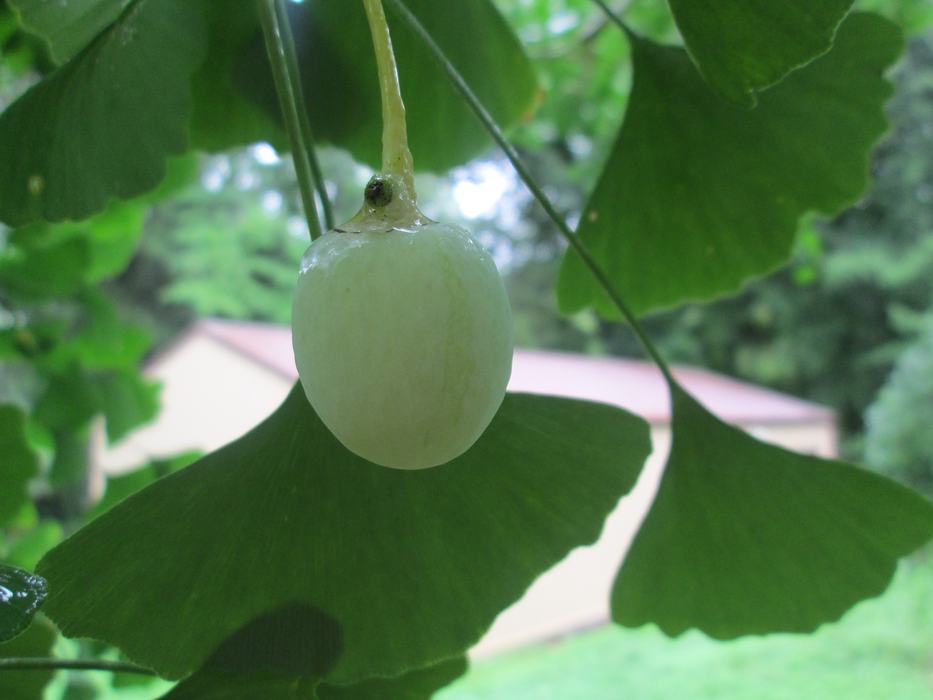
Ginkgo trees (Ginkgo biloba) produce something that certainly looks like a fruit, but these trees are actually gymnosperms. Gymnosperms produce "naked seeds", without an ovary. This is in contrast to angiosperms, which produce seeds within a fruit (such as apples, cherries, and many other examples). Conifers such as pines, firs, and junipers are among the most familiar examples of gymnosperms, but ginkgos are also in the gymnosperm group. They're just not conifers.
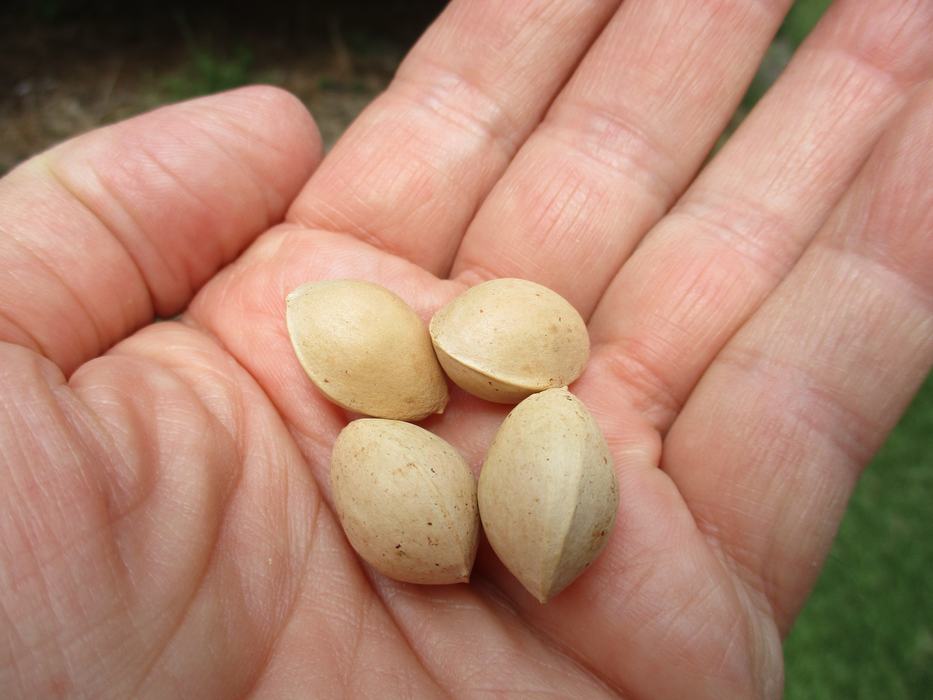
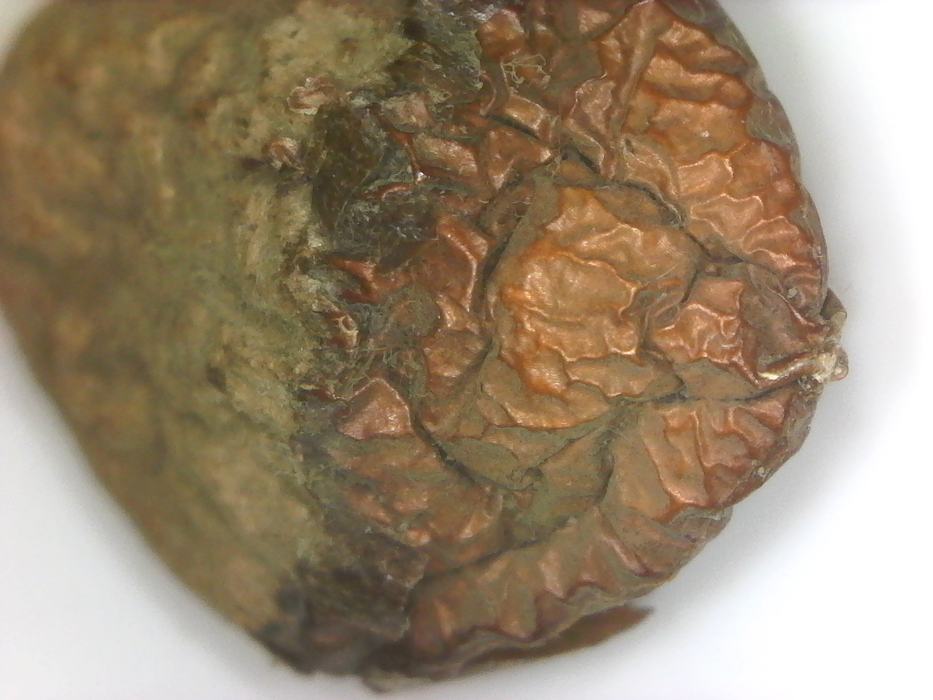
The fruit-like structures we see hanging from female ginkgo trees are in fact seeds, with three layers of a seed coat, or testa. The outer sarcotesta is fleshy or pulpy, and is notorious for its foul smell. As it matures, the color changes from an attractive light green to orange-yellow. If the sarcotesta is removed we can see the sclerotesta, a hard middle layer that is white or tan/white in color and has two or three ridges or edges. If this is broken open, we come to the thin, membraneous endotesta. (This is a follow-up to our 8/20/20 article on the same subject.)