Chinese Tallow Tree

The Chinese tallow tree, Triadica sebifera (formerly Sapium sebiferum) is an invasive plant of significant concern for the southeastern U.S.  Historically it has been more prevalent in deep south states such as Louisiana and Florida, but we're seeing more and more of it in eastern North Carolina.  If warming trends hold steady, this species could eventually become a massive problem for our region.  All Chinese tallow trees are high-priority for removal.  Check with your local Extension office for control recommendations.
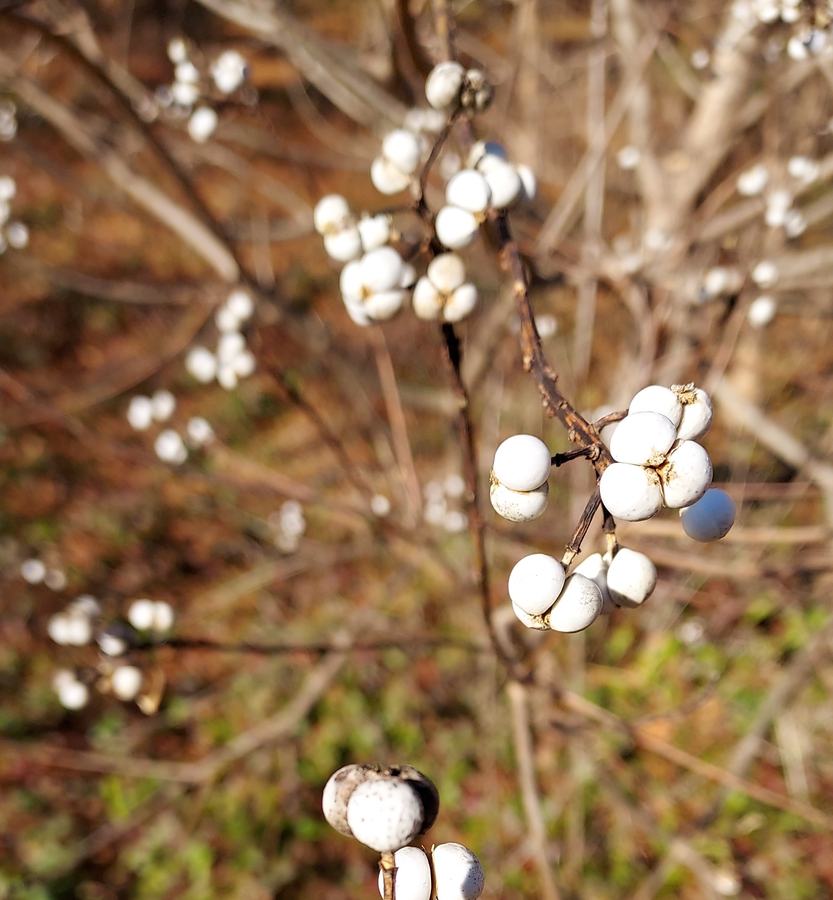
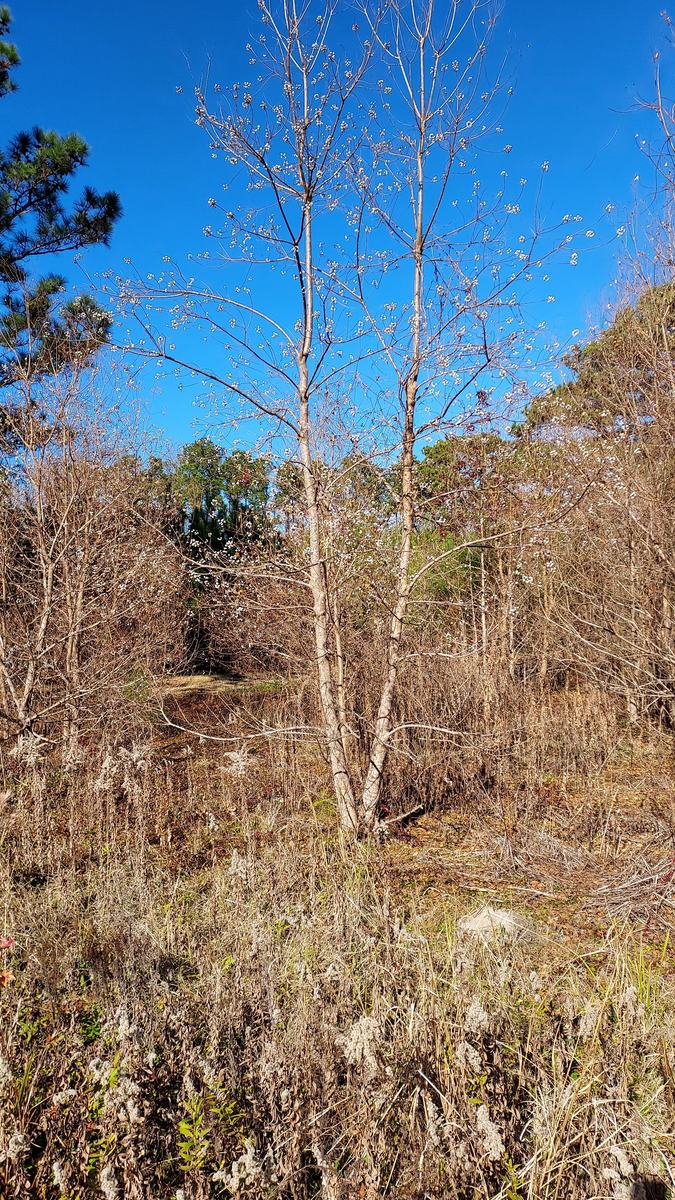
The images below were provided by a Craven County resident in December, and were taken in an area that had formerly been mowed and maintained.  After five years with no mowing, a grove of Chinese tallow trees up to 20-30 feet tall has become established on the site.  A good step to take this winter would be cutting down all the trees, and removing as many of the popcorn-like seed clusters as possible.  Stump regrowth can be treated with a herbicide in the spring.


See the Alabama Forestry Commission information note for examples of chemical control options; consider hiring a professional forester or landscaper if multiple trees are involved.
Tree branch with buds
As described by the NC Extension Gardener Plant Toolbox, "Clusters of greenish three-lobed fruit turn black when ripe. The capsule contains 3 white, wax-coated seeds." The white, wax-coated seeds are prominent in this image. It's easy to see where the alternative common name "popcorn tree" comes from.
Tree
Individual trees produce copious amounts of seed, which are then spread by birds to new locations. Quoting again from the Plant Toolbox, "In order to eradicate this plant, total removal of the plant and seeds is required."