January is a good time to inspect Southern Magnolias (Magnolia grandiflora) for the presence of algal leaf spot. According to Clemson University and other sources, the specific algae is most likely Cephaleuros virescens, which is the only species of plant parasitic algae that is common in the U.S. Pictured below is an infested leaf taken from a Craven County landscape in mid-January 2021.
Algal Leaf Spot
(Updated: May 1, 2026, 2:31 p.m.)
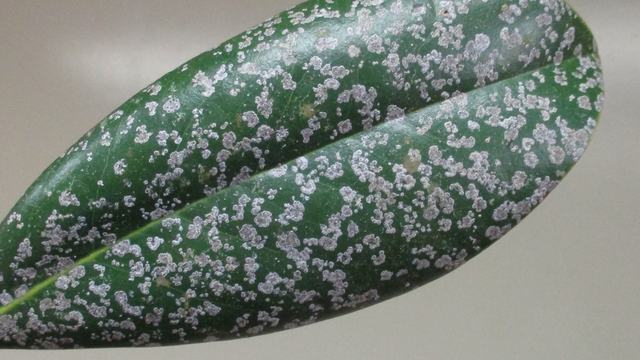
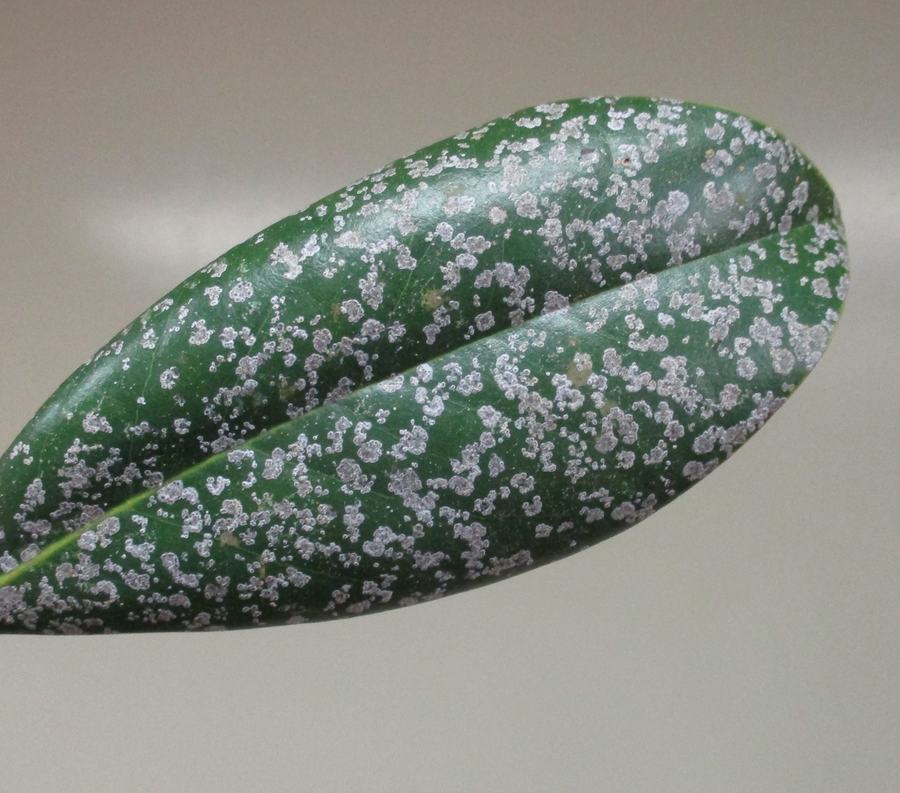
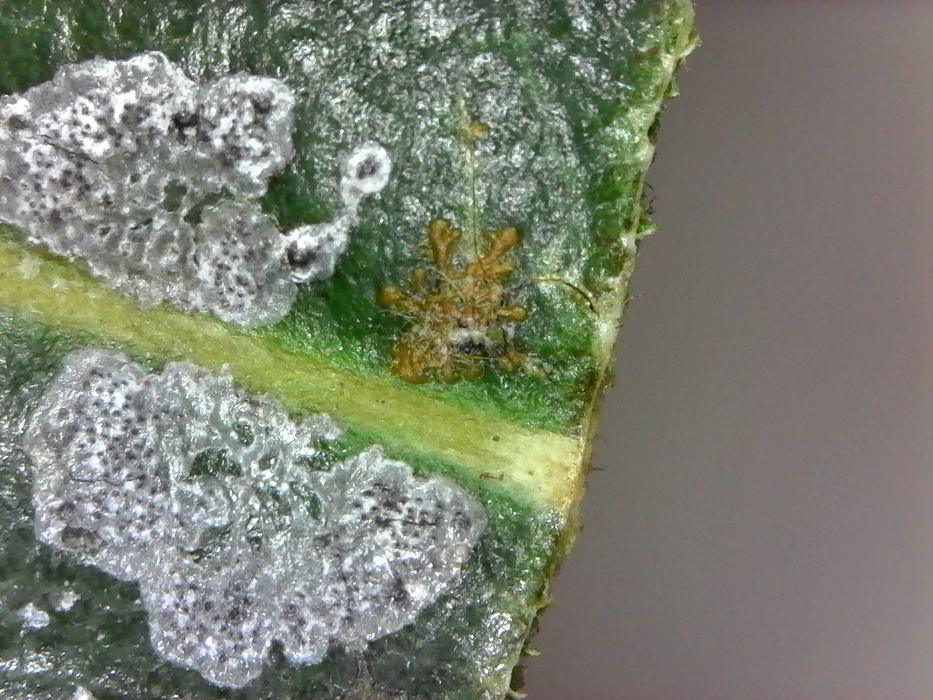
Inspecting your magnolias in winter to remove the fallen, infested leaves prior to the return of warm weather can help reduce the severity of the problem. While algal leaf spot is usually not a serious issue, it could become one if not addressed. In addition to removal of the infected leaves Prevention practices such as improving light or air flow by selective pruning of the adjacent branches or near by trees will decrease chances of the infection recurring or sparededing. Chemical controls with copper-containing fungicides can also be applied, but this should probably be limited to commercial applicators, and becomes impractical on the larger magnolias. Close study of an infested magnolia leaf will reveal that there's more going on than just the growth of the algae. In the close up below (taken from the same magnolia tree), you will note an orange/yellow algal growth to the right; and to the left, a couple of larger grayish/white splotches. These grayish/white structures are "lichenized" algae. In other words, as explained in a Clemson University information note, "Older algal colonies may become colonized (or lichenized) by a fungus and are then classified in the genus Strigula. This is the only lichen that is parasitic on plants. Lichens are composite organisms that include an alga and a fungus." Visit Clemson University Cooperative Extension to review the Clemson note and to compare their images with the ones we've obtained from Craven County.
Thanks to Mike Munster/NC State University and Tom Glascow for his assistance on this topic.
Join our mailing list!
Enter your email address to receive updates.
Written By