The four native pine trees you’ll encounter in the Craven County area are loblolly (Pinus taeda), shortleaf (Pinus echinata), longleaf (Pinus palustris), and pond pine (Pinus serotina). Pond pine is easy to separate from the other three, due to its smaller stature; its irregular, crooked trunk growth; and the fact that it tends to be limited to pocosins or the outer margins of longleaf pine savannas. This brief note will touch on the bark characteristics of loblolly, shortleaf, and longleaf pines, and the unique character of shortleaf pine bark in particular.
Loblolly, Shortleaf or Longleaf? the Bark Will Help
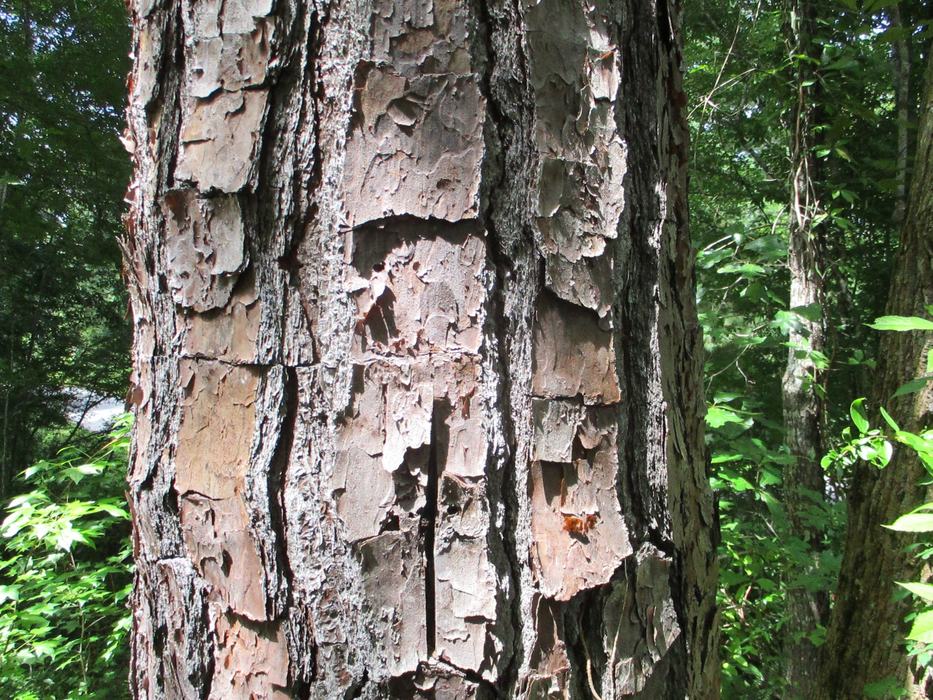
Loblolly pine. Bark is divided by shallow fissures into wide, rectangular blocks.
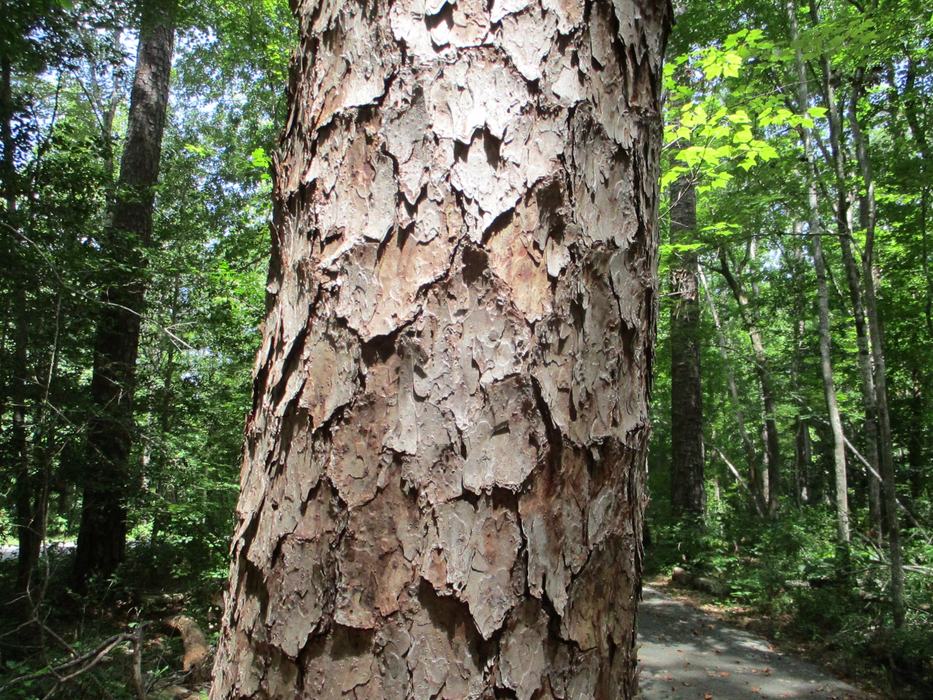
Shortleaf pine (this one spotted by Nathaniel Glasgow on the paved bike trail at Flanners Beach). Bark is fissured into large, irregularly arranged plates, with a somewhat shaggy and overlapping appearance.
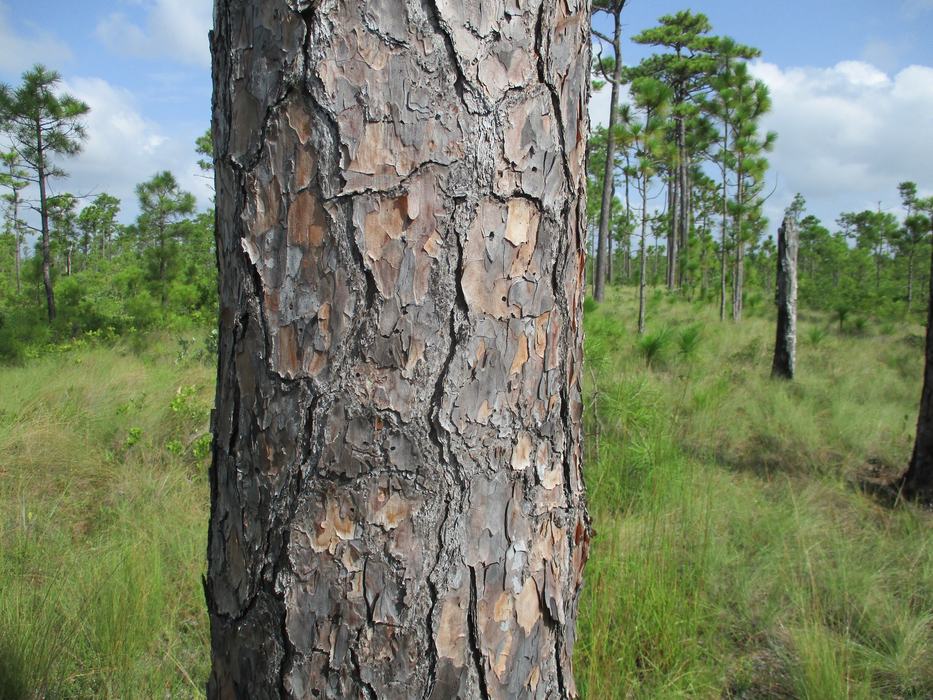
A very mature longleaf pine in the Croatan National Forest. Note the mottled orange-brown coloration. Bark is fissured into irregular, somewhat wavy plates, as compared with loblolly.
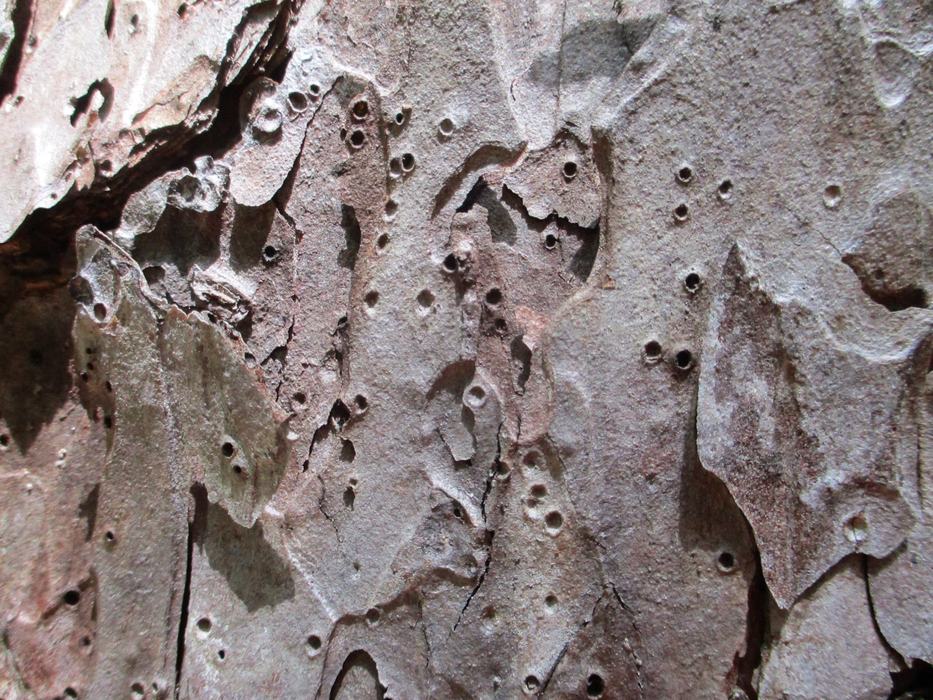
A very unique bark characteristic separating shortleaf pine from loblolly, longleaf, and other southern pine species. These are resin pockets, also described by various references as “spherical pitch pockets,” “small spots of resin,” and “volcanoes.”
Join our mailing list!
Enter your email address to receive updates.
Written By