Back in September of 2016, fruiting structures of a shelf fungus were noticed on the lower trunk of a zelkova (Zelkova serrata) on the grounds of the Agricultural Building. The NC Plant Disease and Insect Clinic identified them as basidiocarps of a common wood-decay fungus in the genus Ganoderma.
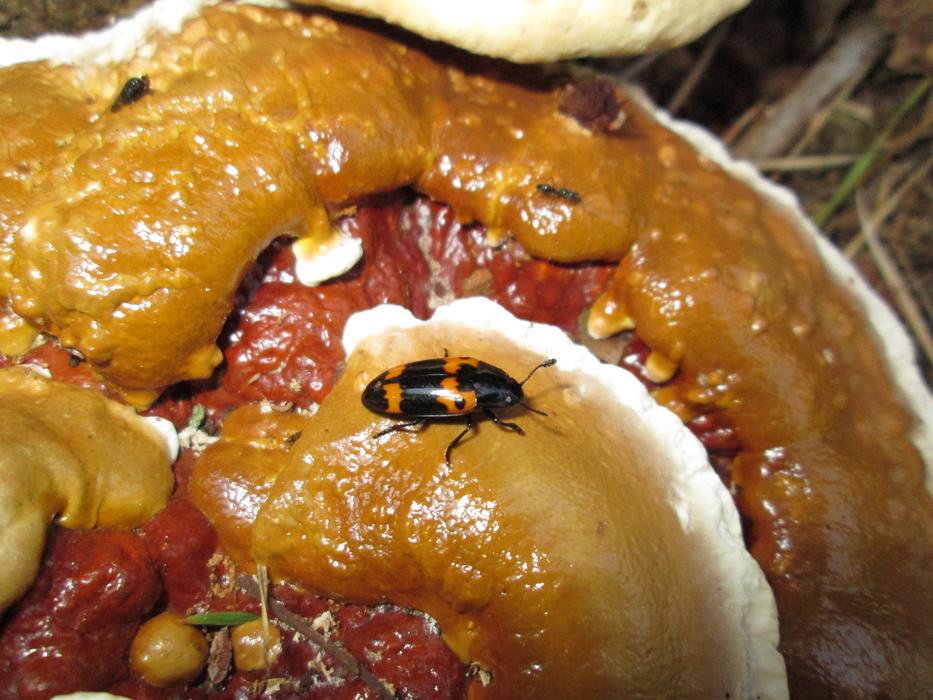
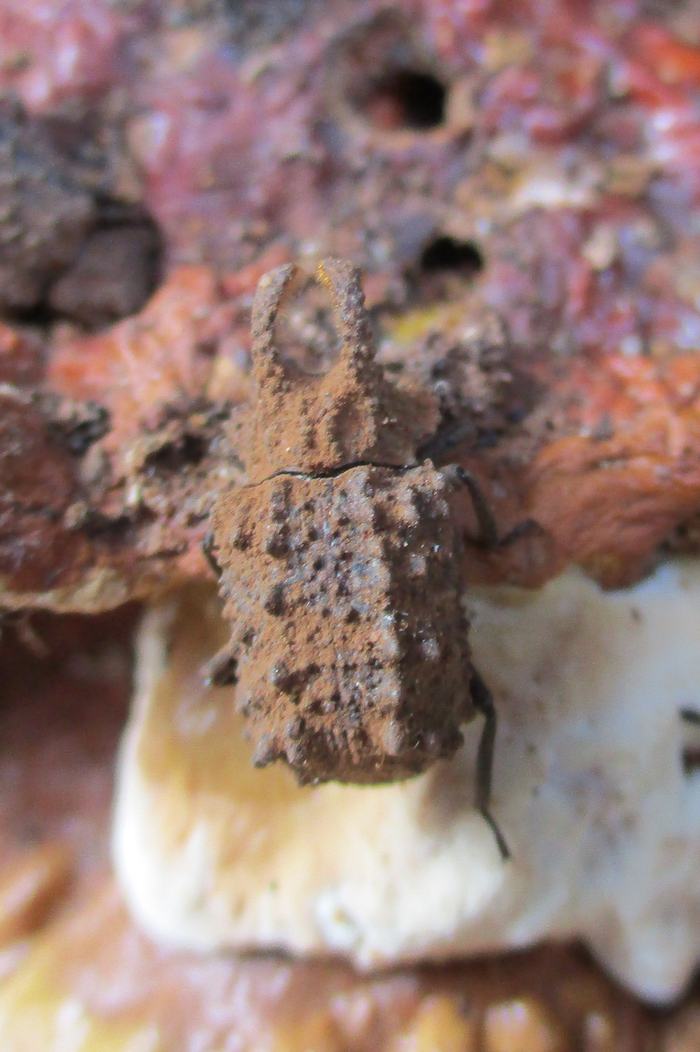
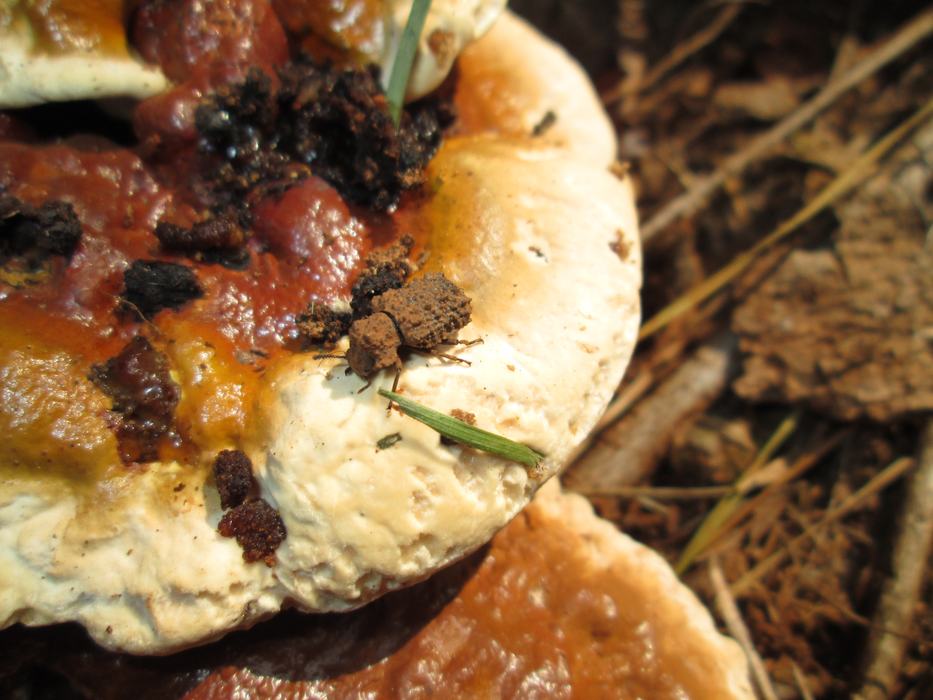
Over the ensuing three years, it was evident that the fungus was thriving, as there was a substantial increase in the numbers of structures on the trunk, and emerging from the ground. This past September, I also began noticing significant numbers of a couple of insect species that appeared to be using the structures for food and/or shelter. From images submitted to the Clinic, these were identified as a pleasing fungus beetle in the genus Megalodacne; and the horned fungus beetle (Bolitotherus cornutus).
“Pleasing fungus beetle” is the actual name, and as compared with the horned fungus beetle, the descriptive adjective is probably deserved. This is a sleek, shiny beetle featuring Halloween black and orange colors, with the Bat Signal vaguely discernible just behind the hind legs. According to an information note from the University of Florida, pleasing fungus beetles feed on the fruiting bodies of fungi, with each species of beetle tending to be specific to a certain group of fungi. In the case of Megalodacne spp., that would be the harder bracket fungi such as Ganoderma spp.
Regarding the horned fungus beetle, thank goodness this insect isn’t the size of a school bus, because it’s a little spooky at just 10-12 mm long. Males are easily distinguished from females by the forward-facing horns, which are actually used to do battle with other males. According to a separate note from the University of Florida, “Males can use one or both pairs of horns to pry courting or copulating males off of a female, like a wedge and a bottle opener, respectively.” Now that’s just uncalled for.
The forked fungus beetle feeds mainly on tissues and spores of the fruiting bodies of shelf fungi including Ganoderma and Fomes, so there’s a good chance of finding both this insect and the pleasing fungus beetle on the same tree.
Be sure to inspect larger landscape trees in the fall for the presence of brackets or shelves, or other suspicious structures, that might indicate the presence of a wood-decay fungus. Good quality images e-mailed to our office might be all you need for identification, and subsequent decision-making on the management of the tree or trees in question.