Join any conversation about agriculture, climate and environmental resource protection and one will hear a handful of labels: sustainable, organic, conventional, regenerative, or alternative. Each comes bundled with assumptions — sustainable is good, conventional is bad, organic is safer, alternative is progressive, regenerative protects the future. These labels are useful shorthand for values and general practices but when it comes to actually protecting soil, water, and ecosystems, the research tells a more complicated story. Simply put, decades of research show that the best means to protect all of these things is to plan systems and conservation efforts to target a specific nutrient pollutant based on the watershed, the specific field, soil type, drainage system, and climate. This usually requires a nested system of conservation efforts the strategically targeted on critical source areas, Indeed, conservation practices work at small scales but they often fail to improve water quality at the watershed scale. No one system of production is the answer for all scenarios.
The evidence for this comes from decades of soil and water quality research, much of it centered on our state whose sandy Coastal Plain soils, humid climate, and legacy of intensive livestock and row-crop production make it something of a living laboratory for what works, what doesn't, and why.
The Same Practice, Different Outcomes
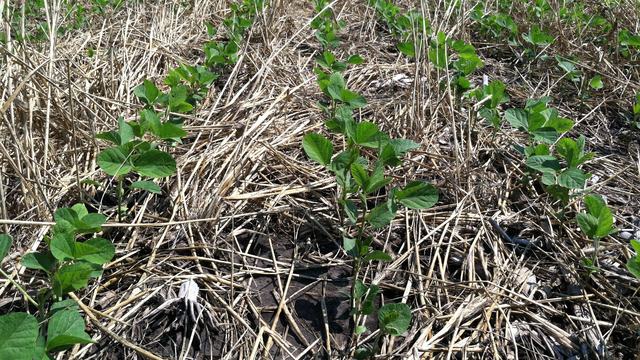
Promoting utilization of a cover crop, one of the most widely recommended "sustainable" practices, is one such example for targeting a specific practice rather than a pollutant. The logic behind cover crop implementation is straightforward: keep something green growing in the off-season to protect soil, add organic matter, and soak up leftover nutrients before these nutrients can leach into groundwater or run off into streams. The philosophy is solid and appealing. And, on average, this is what occurs. However, when one digs into the massive research data on this subject, one finds that site level data and information is quite messy. As examples:
- In cold-climate regions, freeze-thaw cycles can rupture cover crop cells and release the phosphorus stored inside the cover crop. This turns the practice meant to protect water quality into a source of the very soluble, active pollutant it was supposed to prevent. In fact, this process may also release significantly higher phosphorus and nitrate concentrations in both runoff and drainage water from cover-cropped fields.
- A national synthesis of 13 USDA-funded watershed studies — spanning cropland and pastureland across the country — found that conservation practices sometimes produced unintended consequences, depending on the biophysical setting and soil hydrology. Simply put, the desired beneficial impact may or may not be realized depending upon the soil type, annual rainfall amount, initial soil nutrient level, farming practices, tillage practices, and even geography of the site.
- Research on phosphorus-focused conservation practices found something similar in reverse! Ironically, strategies designed to reduce particulate phosphorus (the kind attached to eroding soil) sometimes actually increased dissolved phosphorus exports by 37% to 250%! (Reducing erosion leaves more soil phosphorus “sitting at the surface” and thus it easily dissolves into runoff.)
None of this means cover crops or any conservation effort are bad practices. It simply means their effects depend heavily on soil type, drainage class, climate, and the specific form of nutrient already present in the ground. So, it is not that a single farming practice or philosophy will preserves resources and keeps agriculture sustainable. Rather, the system chosen will need to determine the targeted, critical nutrient considered a “pollutant” and develop a systems approach for an entire watershed to be fully effective.
Legacy Phosphorus: When History Overrides Intent
Perhaps the clearest illustration of why site-specific management matters is the growing scientific focus on "legacy phosphorus" — the reservoir of phosphorus left behind in soils from decades of historical fertilizer and manure application. Legacy phosphorus doesn't care what farming philosophy a field currently follows. A soil that received heavy manure applications for 30 years or more will keep “leaking” phosphorus into nearby waterways for decades or even centuries afterward, regardless of whether the current operator has since switched to organic certification, no-till, or textbook nutrient management. The best means to eliminate this phosphorous excess within the system is to avoid all excessive application, control the movement of phosphorus within the watershed and trap what can be held within the system through a systematic approach. Even so, it will most likely take 30-50 years of effort and monitoring to note change.
Why Labels Fall Short
"Sustainable," "organic," "conventional," and "alternative" are, at their core, philosophies or certification standards that describe inputs allowed or values embraced. None will guarantee any outcome. A farm can be certified organic and still sit on a legacy-phosphorus hotspot that leaches for years. A "conventional" farm using precision nutrient management, controlled drainage, and site-calibrated cover cropping can outperform a poorly matched "sustainable" operation on every water-quality metric that matters. Research does not promote which philosophy is best? Rather it denotes the specific parameters and circumstances needed to obtain the same or similar results. As such, to protect our natural resources one must examine data: soil testing for legacy nutrient loads, knowledge of local drainage patterns, climate-specific timing (a freeze-thaw risk in Minnesota is irrelevant in eastern North Carolina, and vice versa), and monitoring that tracks actual nutrient export rather than assuming a practice works because it's supposed to do so.
What Site-Specific Conservation Looks Like in Practice
Decades of research out of institutions like NC State University — building on foundational studies from the 1970s on coastal plain nitrogen dynamics through more recent USDA watershed synthesis work — point toward a few consistent principles for conservation and agricultural efforts to include:
- Diagnose before prescribing. Is the dominant risk on this field erosion and particulate loss, or dissolved nutrients from legacy soil applications? The right practice differs depending on the answer.
- Match practices to drainage and climate. Controlled drainage structures, for instance, have shown consistent nitrogen reductions in North Carolina's tile- and ditch-drained coastal plain — a finding that doesn't necessarily transfer to a well-drained Piedmont field or a cold-climate tile-drained Midwest system.
- Monitor outcomes, not just adoption. A practice implemented is not the same as a practice working. Long-term water quality monitoring — not just tallying acres enrolled in a conservation program — is what reveals whether a given combination of practices is actually reducing nutrient export on that specific land.
- Expect trade-offs, and plan for them. Reducing one form of nutrient loss can increase another. Effective conservation accounts for this rather than assuming any practice that has a desired benefit may not also have an undesirable impact.
- Adapt to changing climate. Research and data supporting many of these conservation efforts were established based on historical weather data. Weather patterns have changed. Peer reviewed data shows that within the Southeastern US, rainfall intensity of 2 inches or more is greater than years past. Just one excessive rainfall event, especially tropical storm systems, can eliminate years or decades of effort. As such, research must continue.
The Bottom Line
None of this is an argument against organic farming, sustainable agriculture, or any other approach — each can be part of an effective strategy. It's an argument against treating any single label as a proxy for environmental performance. Too, the promotion of any one conservation practice over another for all agricultural production is invalid. Even more so, while many small practices are indeed philosophically “good”, they often fail to reach desired benefits unless the entire watershed implements additional conservation efforts. The soil science and watershed research consistently point in one direction: resource conservation succeeds or fails at the level of the individual field, not the philosophy stamped on the label. Farms, regulators, and consumers alike would be better served by asking what's actually happening in the soil and water of a specific place — rather than which category a farm belongs or type of production it practices.